With all the turmoil in the world centered on beliefs that usually include the descriptor “Islam,” booking a cruise specifically because the cruise included Morocco was probably a strange choice. We had been to the northern tip of Morocco a few years ago, but we wanted to go to Marrakech and that was just not possible because that trip was so short.
We arrived in Casablanca just as the sun came up and all a person could see outside were industrial cranes. Dozens of cranes and only one minaret–a very tall one–the only one visible. It appeared that Capitalism was the true religion and I think this guess iw probably correct. It turns out that the minaret has a powerful green laser that points to Mecca, but I wouldn’t know about it until 12 hours later when our tour guide told us about it.
I didn’t know what to expect when we drove through Casablanca. It was nothing like the movie, of course. It was a mostly modern city with all the conveniences and inconveniences we accept in other parts of the world. One of the more interesting features was the large numbers of farm animals kept in pens the size of a city block. Sheep, cows, and goats walked around on dirt and waited for their human servants to bring nourishment. Shanty towns, where rooftops were secured by old tires sitting on plastic sheets, existed next to modern buildings. Modern trams waited for cars to unblock intersections so they could pass, and the passing almost always was accompanied by the blare of multiple horns. Miriam, our tour guide, said car dealers had a phrase for customers: “good horn, good brakes, and good luck.”
For most of the three hour drive from Casablanca to Marrakech, Miriam told us one fact after another and all of them were fascinating. We were curious whether she was Jewish when she told us her name, but we didn’t want to ask. Actually, we did want to ask, but it was too personal. Miriam told us that Casablanca was divided into sections and each section had a mosque, synagogue, and a Christian church. She talked about how Morocco was very tolerant of all religions and also how Morocco took in Jews when they were expelled from Spain. She talked about how Islam came to Morocco and how the mainly atheist Berbers were among the first converts. She also talked about how Morocco was mainly Sunni and they were much more tolerant than Shiites.
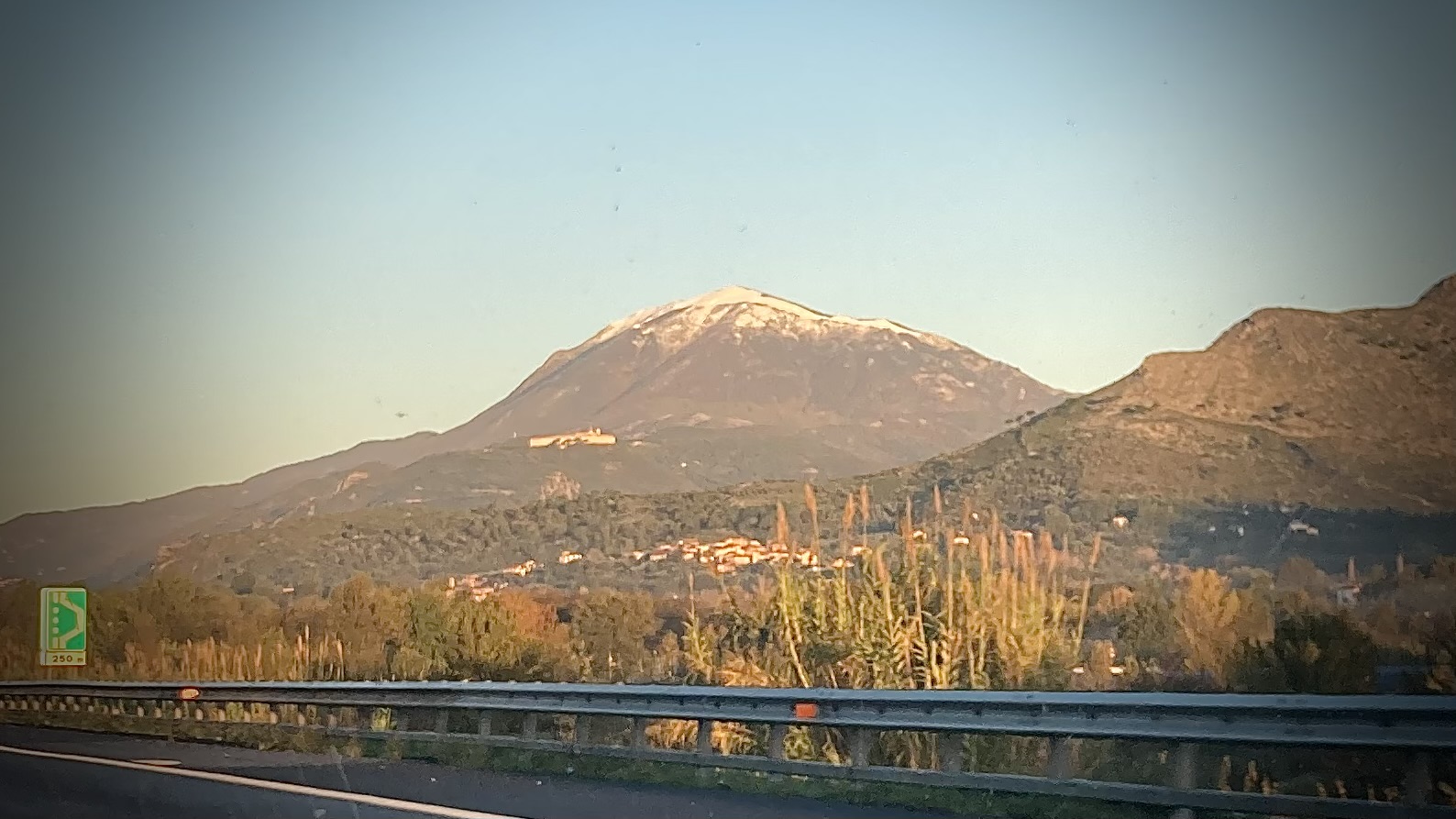
Miriam said there was so much construction because the king wants to eliminate the shantytowns and was building condominiums everywhere. Tourism is one of Morocco’s main industries and they are working to make Morocco even more beautiful. Some features needed only to preserved from human intervention. We saw beautiful rolling, green hillsides and rock formations. The Atlas mountain range was visible as we entered the outskirts of Marrakech. Most surprising to me was how green everything was. I expected to leave Casablanca and drive through a desert until Marrakech. Miriam said it had been raining “cats and dogs” for days before we got there and it was obvious because of the standing water in the fields. But, Miriam also talked about how they have irrigated the land for centuries and that only the method of irrigation had changed as modern methods had improved the old.
We saw Saudi tombs and a palace that housed the wives and concubines of someone of old times. Pictures can provide better explanations than words so come back to this blog after pictures have been added.
What was probably a close approximation to a real Moroccan feast was one of the highlights of the tour. The food was really good as were the musicians. A lady danced with a multi tiered candelabra balanced on her head. A belly dancer entertained all of us and danced with a few members of the crowd. And, it was a feast. Spicy baked chicken, local bread unlike bread I’ve tasted before, several plates of sauces, and a very large plate of cous cous with vegetables. Cookies were dessert, but I think I left out the wine. Yes. I left out the wine. There is something extra special about having a glass of wine in an Islamic country. The wine was not spectacular, but it was good.
No excursion is complete without a place for tourists to contribute to the local economy–a well connected member of the local economy, I am sure. We contributed and contributed and I carried a bag full of spices and oils the rest of the trip. The cooking spices were the hook for me, while others dreamed of “medicinal” oils solving the world’s problems. It was probably more snake oil than anything else, but the presenter was very entertaining and I am so glad we ate before we started smelling the spices. I’m sure a second bag would have been required.
“The square” was our final stop in Marrakech. We were given 30 minutes to explore what was a circus and open air market rolled into one. Monkeys, beggars, and peddlers of all sorts of wares assaulted our visual, audio, and nasal sensors. I had been warned by an Italian coworker to be careful in that square because the pickpockets were experts. She said, “and I say this as someone from Naples.” Well, the only way someone got my money was when I handed it to them. I handed it to a person apparently in need, the waiter who brought excellent mint tea, and the snake handler who draped a snake around my neck and placed the snake’s head between my index finger and thumb. He was going to put another snake in my other hand, but that snake bit him and I declined. A 14 foot black cobra was just a foot or so away from me and raised up to keep an eye on me. Okay, it wasn’t 14 feet long, but it was right next to me as I was kneeled on the ground with a snake in one hand as the snake handler beginning to negotiate the price for my freedom. $20 was the cost instead of 30 Euros. Probably not a bargain, but I can live with it.
“Oh my god” said the woman who was trying to sell bracelets. She asked $10 dollars for a bunch of them and Jessica asked “you want to buy my husband for $10?” After fending off many other street sellers while we waited for our bus to arrive, we got back on the bus and drove back to Casablanca. It was dark very soon and there wasn’t much to see until the green laser appeared.
We got off the bus and went through a security check which consisted of a very quick electronic scan of our bags and a walk through a scanner set to let most everything through. We were then allowed to walk back toward the bus and the ship. Because there was no line or supervision, people could literally walk to the ship without being scanned. Thankfully, real security people on the ship scanned our bags, coats, and items emptied from our pockets. The last thing I would want is for someone to bring something onto the ship that would do us harm–especially something brought onto the ship from a very tolerant Islamic country–maybe the last one on the planet.











 Dreams of My Sons' Father